
Author: CyberDudeBivash
Powered by: CyberDudeBivash Brand | cyberdudebivash.com
Related: cyberbivash.blogspot.com
Daily Threat Intel by CyberDudeBivash
Zero-days, exploit breakdowns, IOCs, detection rules & mitigation playbooks.
Follow on LinkedIn Apps & Security Tools
CYBERDUDEBIVASH | CYBERDUDEBIVASH PVT LTD | WWW.CYBERDUDEBIVASH.COM
CVE-2026-22844: Zoom Flaw Allows Low-Privileged Meeting Participant to Execute Arbitrary Commands
Premium Vulnerability Analysis & Threat Intelligence Report
By CYBERDUDEBIVASH® – Global Cybersecurity Authority
Executive Summary
CVE-2026-22844 is a critical security vulnerability affecting Zoom that allows a low-privileged meeting participant to execute arbitrary commands on a target system or within the Zoom client context under specific conditions.
This flaw fundamentally breaks the trust model of virtual meetings, transforming what should be a passive participant role into an active execution vector. Given Zoom’s deep integration into enterprise workflows, government communications, and regulated industries, this vulnerability represents a high-impact collaboration-layer threat.
This is not just a Zoom bug — it is a remote execution risk embedded in business communications.
Vulnerability Overview
| Attribute | Details |
|---|---|
| CVE ID | CVE-2026-22844 |
| Severity | Critical |
| Attack Type | Arbitrary Command Execution |
| Attacker Privilege | Low (meeting participant) |
| User Interaction | Minimal / contextual |
| Attack Vector | Network (live meeting environment) |
| Impact Scope | Local system / enterprise endpoint |
Technical Root Cause (High-Level)
The vulnerability arises from insufficient privilege validation and unsafe command handling within Zoom’s meeting interaction components.
Key Design Failure
- Zoom allows meeting participants to interact with collaboration features (chat, reactions, screen-share hooks, plugins, or meeting extensions)
- A specific interaction pathway fails to enforce strict privilege separation
- User-supplied input is improperly sanitized or trusted
- This input can be coerced into command execution within the Zoom client or helper process
Result:
A participant with no host or admin privileges can escalate their influence to code execution capability.
Attack Chain Breakdown
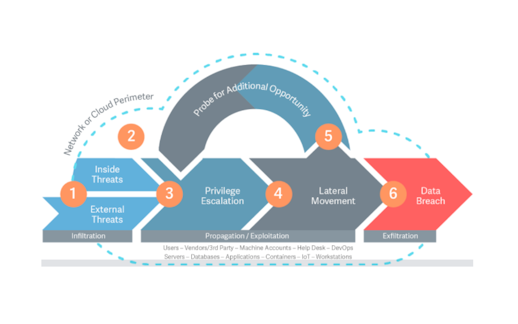
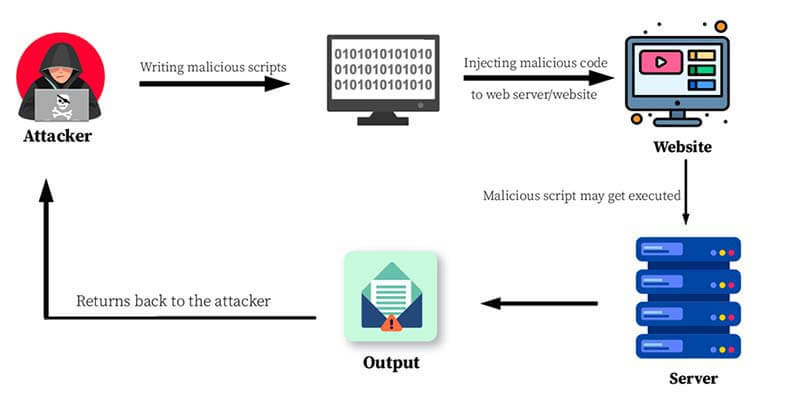
Stage 1: Meeting Access
- Attacker joins a Zoom meeting as a standard participant
- No special permissions required
Stage 2: Malicious Interaction
- Abuse of a vulnerable feature (e.g., input handling, plugin interface, or auxiliary service)
- Crafted payload delivered via legitimate meeting interaction
Stage 3: Privilege Abuse
- Zoom client or helper process executes attacker-controlled commands
- Execution occurs under the context of the logged-in user
Stage 4: Post-Exploitation
- Malware deployment
- Credential theft
- Persistence mechanisms
- Lateral movement (if enterprise context exists)
Why This Vulnerability Is Especially Dangerous
Trust Boundary Violation
Meetings assume participants are non-threatening. CVE-2026-22844 shatters this assumption.
No External Malware Required
The exploit uses legitimate Zoom functionality, bypassing many endpoint controls.
Enterprise Amplification
Zoom is often:
- Whitelisted by firewalls
- Trusted by EDR
- Integrated with SSO, calendars, and internal tools
Social Engineering Synergy
Attackers can:
- Masquerade as legitimate attendees
- Combine exploit with phishing or impersonation
- Execute payloads during live calls
Real-World Impact Scenarios
Enterprise & Corporate
- Compromise of employee endpoints during meetings
- Data exfiltration from shared environments
- Internal pivoting via compromised hosts
Healthcare
- Exposure of sensitive patient discussions
- Endpoint compromise in clinical settings
Government & Defense
- Espionage during confidential briefings
- Exploitation of classified communication endpoints
Education & Remote Work
- Mass exploitation in large online sessions
- Malware propagation across unmanaged devices
CYBERDUDEBIVASH Threat Assessment
Threat Level: (High to Critical)
CVE-2026-22844 should be treated as an active exploitation candidate, especially in environments that rely heavily on virtual collaboration.
This vulnerability demonstrates a broader trend:
Collaboration platforms are becoming execution surfaces.
Immediate Mitigation & Defensive Actions
Patch Immediately
- Apply Zoom security updates addressing CVE-2026-22844
- Enforce minimum client versions via MDM / device policy
Restrict Meeting Capabilities
- Disable unnecessary participant features
- Limit plugin and extension usage
- Enforce host-only privileges where possible
Endpoint Hardening
- Monitor Zoom-related child processes
- Alert on anomalous command execution
- Apply application control / allowlisting
Zero-Trust Meetings
- Treat meetings as untrusted input channels
- Assume participant-originated data is hostile
- Apply behavioral monitoring during live sessions
Strategic Lesson
Virtual collaboration tools are no longer “just communication software.”
They are:
- Execution-capable platforms
- Identity-rich environments
- High-trust attack surfaces
Security teams must expand threat models to include:
“What if the meeting itself is the exploit?”
CYBERDUDEBIVASH Closing Authority Statement
CVE-2026-22844 turns a meeting attendee into a potential attacker.
In a world where business runs on virtual collaboration, any flaw that enables execution from within a meeting is a board-level risk.
Organizations that ignore collaboration-layer security will discover breaches not in logs —
but mid-meeting.
CYBERDUDEBIVASH Advisory & Services
CYBERDUDEBIVASH provides:
- Collaboration Platform Security Audits
- Zoom & Unified Communications Hardening
- Endpoint Threat Hunting
- Zero-Trust Collaboration Architecture
- Executive & SOC BriefingsExplore the CYBERDUDEBIVASH® Ecosystem — a global cybersecurity authority delivering
Advanced Security Apps, AI-Driven Tools, Enterprise Services, Professional Training, Threat Intelligence, and High-Impact Cybersecurity Blogs.
Flagship Platforms & Resources
Top 10 Cybersecurity Tools & Research Hub
https://cyberdudebivash.github.io/cyberdudebivash-top-10-tools/
CYBERDUDEBIVASH Production Apps Suite (Live Tools & Utilities)
https://cyberdudebivash.github.io/CYBERDUDEBIVASH-PRODUCTION-APPS-SUITE/
Complete CYBERDUDEBIVASH Ecosystem Overview
https://cyberdudebivash.github.io/CYBERDUDEBIVASH-ECOSYSTEM
Official CYBERDUDEBIVASH Portal
https://cyberdudebivash.github.io/CYBERDUDEBIVASH
Official Website: https://www.cyberdudebivash.com
Blogs & Research:
https://cyberbivash.blogspot.com
https://cyberdudebivash-news.blogspot.com
https://cryptobivash.code.blog
Discover in-depth insights on Cybersecurity, Artificial Intelligence, Malware Research, Threat Intelligence & Emerging Technologies.
2026 CyberDudeBivash Pvt. Ltd.
Global Cybersecurity Authority | AI-Powered Threat Intelligence | Zero-Trust Security
Contact: iambivash@cyberdudebivash.com Website: https://www.cyberdudebivash.com
#CVE202622844 #ZoomSecurity #CollaborationSecurity #ArbitraryCommandExecution #EnterpriseRisk
#ZeroTrust #ThreatIntelligence #VulnerabilityAnalysis #CYBERDUDEBIVASH
 Cyberdudebivash
Leave a comment